Drive-Thru Coffee Shop: What the Site Needs Before You Open
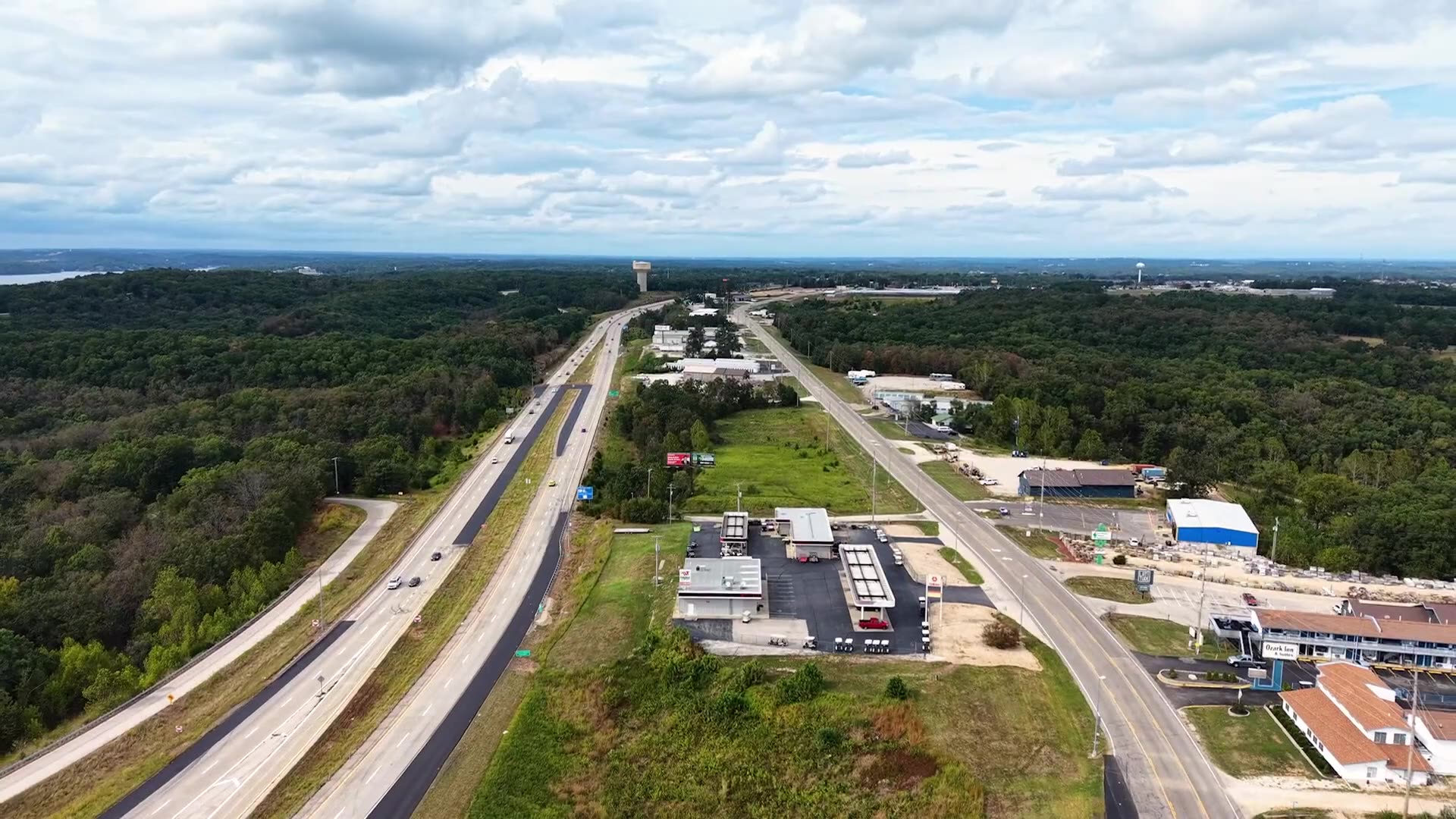
Most guides to opening a drive thru coffee shop spend their time on equipment, menus and suppliers. Those matter, but you can change all of them after you open. You can’t change the site. A drive-thru depends on whether drivers can see it, get into it, wait in line on it, and get back out onto the road without a fight.
This post covers the site side of the plan: what to look for in the land before you sign anything. We use the Highway 54 corridor in Osage Beach as the example, because that’s where our properties are.
Be on the Morning Side of the Road
A drive-thru coffee stop is usually something people fit into a drive they were already making. That makes the direction of the traffic as important as the amount of it. Drivers pull in when the shop is on their side of the road and the turn is easy. Asking them to cross oncoming lanes during their commute is asking a lot.
Traffic counts tell you how many cars pass. Past 6432 Osage Beach Parkway, it’s 32,000 to 38,000 vehicles a day. A count won’t tell you which way the morning traffic runs, so go stand at the site during the hours you expect to be busiest and watch. On Highway 54 that means locals heading to work and visitors heading to the lake, and they don’t always move at the same times or in the same direction.
Give the Line Somewhere to Go
The line is the part of a drive-thru that uses up land. Every car waiting to order needs a space, and those spaces have to be on your lot, not backed up into the road. A line that spills into traffic is a problem for your customers, for everyone else on the road, and for the city.
How a car moves through the lot
- Turn inA right turn off the road, with room to slow down.
- Wait in lineEvery waiting car sits on your lot, not on the shoulder.
- OrderThe menu board, placed so the line keeps moving.
- Pick upThe window, beside the building.
- Turn back outA separate exit, so leaving cars don’t block arriving ones.
A simplified diagram, not a site plan. Your engineer and the city set the real layout.
How long the lane needs to be depends on how many cars you serve in your busiest hour and how fast you serve them. Plan for that hour, not an average one.
Osage Beach’s off-street parking rules set stacking for one drive-up use by name: banks need 3 stacking spaces for each drive-up window. Our reading is that the section doesn’t set a number for other drive-throughs, so ask the city’s planning staff early what they will want to see for your queue. If you add seating, the restaurant parking rule applies too: 1 space for every 2 employees on the largest shift, plus 1 space for every 3 seats.
Make It Easy to Get In and Back Out
On a divided highway, the hard move is the left turn across fast traffic. Missouri has been replacing many of those crossings with J-turns, where drivers turn right with traffic, merge left, and then make a U-turn to head the way they want to go. In MoDOT’s review of 47 J-turn intersections in Missouri, fatal and injury crashes dropped 74 percent.
6432 Osage Beach Parkway uses J-turns for getting in and out of the property, which keeps customers from having to cut across the highway. Wherever you look, check three things:
- Can a driver get in with a right turn, without stopping dead in a travel lane?
- Is there room for a separate entrance and exit?
- Can a delivery truck get in, unload and leave without blocking the line?
Let Drivers See It Before the Turn
At highway speed, a driver needs to spot you early enough to change lanes and slow down. Once they’re beside your sign, it’s too late. Look at the site from both directions, starting far enough back that a driver would still have time to react, and note anything that blocks the view: trees, a rise in the road, a neighbor’s building or sign. The city also has its own sign regulations, so check what you can put up before you count on it.
5231 Osage Beach Parkway sits near the freeway, with visibility from both the main highway and the business route. That gives a coffee shop two streams of traffic that can see it.
Drive Thru Coffee Shop Zoning in Osage Beach
Osage Beach’s C-1 General Commercial district permits “drive-in restaurants, any other retail trade, where persons are served in automobiles.” It comes with two distance rules. The use has to be at least 200 feet from any existing hospital, school or church, and at least 200 feet from a residential district.
The second rule is the one that catches people. A lot can be zoned commercial and still sit too close to a neighborhood. Confirm the zoning of the exact parcel and measure the distances before you buy. The city’s planning department has the final word, and this isn’t legal advice, so bring your plan to them and to a local land use attorney.
Water, Sewer and Power
A coffee shop runs on water. The espresso machines, ice, sinks and restrooms all need a reliable supply, and everything that goes down the drain needs somewhere to go. Having city water and sewer on the lot is usually far simpler than bringing them in or building around a well and septic system. Ask whether utilities are on the site or only nearby, and what it takes to connect.
Two acres of 6432 are ready to build on now, with city water and sewer on site. 5231 has city water and sewer on site, and power is ready for development.
Two Sites on Osage Beach Parkway
Both are part of our portfolio of Lake of the Ozarks commercial real estate, and both sit on the road most of the Lake’s traffic already uses.

6432 Osage Beach Parkway
8.6 acres on Highway 54 with J-turn access and 32,000 to 38,000 vehicles a day.
See 6432 Osage Beach Pkwy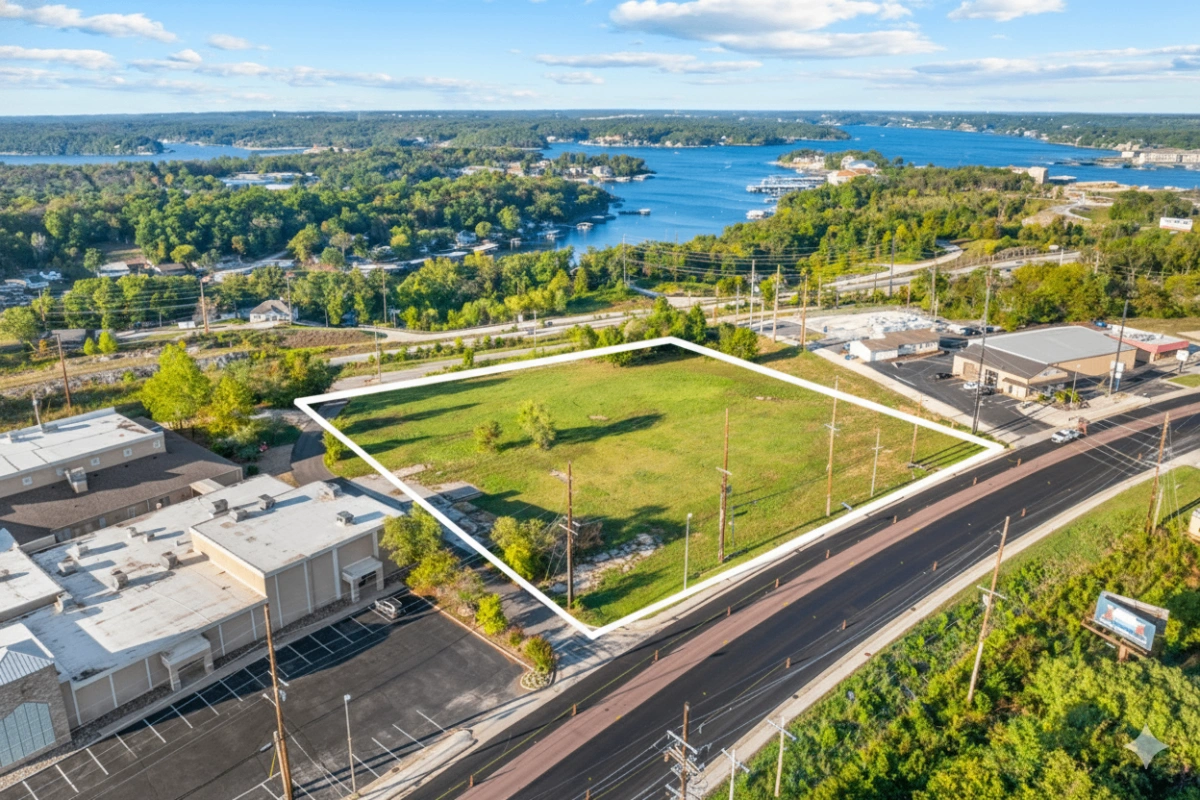
5231 Osage Beach Parkway
About 3 level acres with city water and sewer, seen from the highway and the business route.
See 5231 Osage Beach PkwyThe owner is open to ideas. Tell us about your drive-thru, and we’ll have renderings made that show it on the property.
Pitch your ideaWalk the Site With Us
Call our realtor, Melissa Kranz, at (573) 216-0482, Monday through Saturday.
We reply within 24 hours.